 Panacea Bio ChemPreprint Server
Peptide & Metabolic Pharmacology
Panacea Bio ChemPreprint Server
Peptide & Metabolic PharmacologyWorking paper · Open access
Panacea Bio ChemPreprint Server
Peptide & Metabolic PharmacologyAll of these peptides were synthesized, tested in vivo and in vitro, and are undergoing clinical trials as we speak — although many further details remain secret.
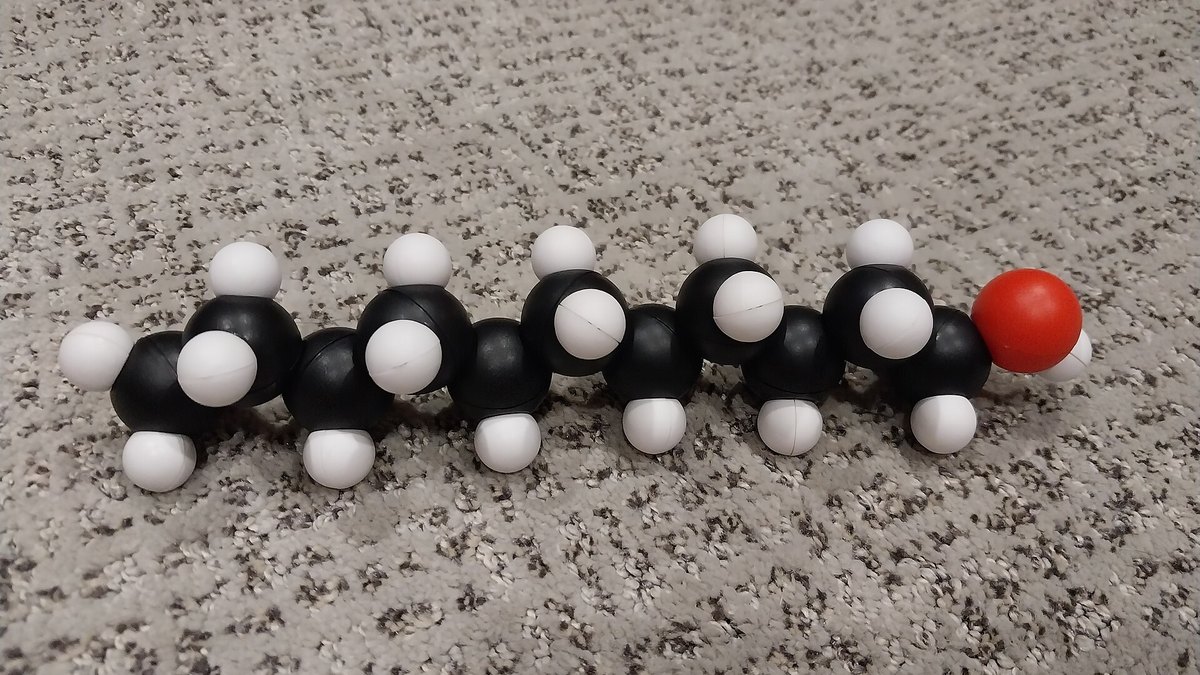
Modern therapeutics increasingly ask a molecule to do more than one thing at once. Two routes exist. A combination hands the patient several separate drugs; a unimolecular multi-agonist engineers those activities into a single molecule that engages several receptors at a built-in ratio. This working paper sets out, in plain terms, why the single-molecule route often wins: the ratio between activities is fixed in the sequence, the actions share one pharmacokinetic profile, drug–drug interaction largely disappears, and a single dose is linked to better adherence. Clinical multi-agonists such as tirzepatide (GIP/GLP-1) and retatrutide (GLP-1/GIP/glucagon) illustrate the principle. We close with where Panacea Bio Chem places its own research, and where a purpose-built "quadruple agonist" might reach.
Many conditions are not driven by a single switch. Metabolic disease, blood pressure, pain and infection each respond to touching several biological levers together. The oldest way to do that is combination therapy1: give two, three or more drugs at once, each chosen for one job. It works — the HIV and tuberculosis cocktails changed medicine — but every extra molecule adds its own dose, its own timing, and its own way of being absorbed and eliminated.
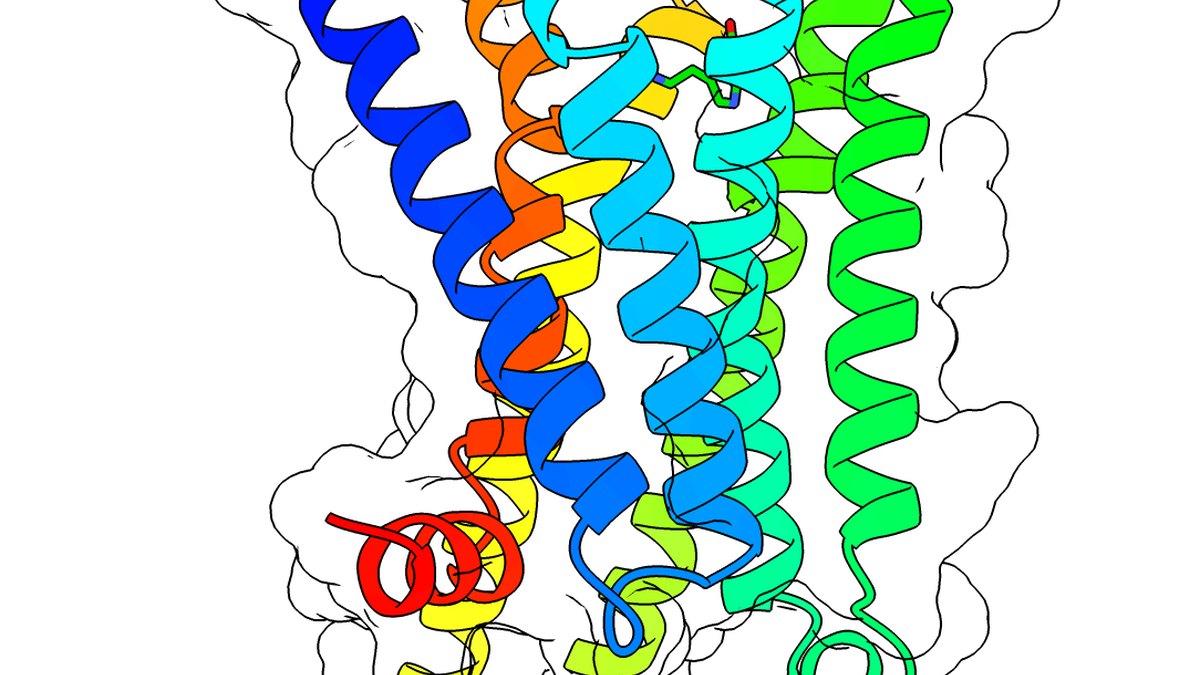
The newer way is to design a single molecule that already carries several actions — a polypharmacology2 written into one structure. In peptide science this is unimolecular multi-agonism: one engineered chain that folds sequence fragments from several natural hormones together so it can switch on the GLP-1, GIP and glucagon receptors — members of one class-B GPCR superfamily — from a single backbone. The question this paper asks is simple: when is one molecule better than a cocktail?
A cocktail is not free just because each component is well understood. Combine several drugs and four quiet problems appear at once:
Fold the activities into one molecule and each of those costs is addressed at the source:
The clinic already shows the pattern. Tirzepatide, a unimolecular dual GIP/GLP-1 agonist, produced up to roughly 22.5% mean body-weight reduction over 72 weeks in the SURMOUNT-1 trial7. Retatrutide, a single molecule agonising GLP-1, GIP and glucagon receptors, reached up to about 24.2% at 48 weeks in a phase 2 study8. The engineering roots trace to the discovery that one intermixed peptide could carry balanced dual6 and then triple4 receptor activity in a single chain.
| Dimension | Combination / drug cocktail | Unimolecular multi-agonist |
|---|---|---|
| Ratio between activities | Drifts with differing half-lives | Fixed in the sequence |
| Pharmacokinetics | Several curves to keep aligned | One profile, all actions in phase |
| Drug–drug interaction | Possible between components | Removed between co-agonist activities |
| Regimen | Multiple units / schedules | Single dose |
| Adherence signal | Baseline | ~26% lower non-adherence for single-unit dosing5 |
| Regulatory entity | Each component + the combination | One molecule |
None of this makes cocktails obsolete: where activities must be titrated independently, or where a partner drug already exists, a combination remains the sensible tool. The single-molecule route wins precisely when the balance of actions is the therapy — which is exactly the metabolic case.
In 2003 two epidemiologists, Nicholas Wald and Malcolm Law, published a famous provocation in the BMJ4b: a single "Polypill" combining a statin, three half-dose blood-pressure agents, folic acid and aspirin that, they argued, could cut heart attacks and strokes by more than 80% if taken widely from age 55. Their key insight was not chemistry but compliance — one pill is taken far more faithfully than five. The polypill was combination therapy's answer to adherence: put the cocktail in one capsule.
A unimolecular multi-agonist takes the same instinct one level deeper. The polypill still holds several distinct molecules in one shell, each on its own pharmacokinetic clock. Fold the actions into a single molecule, and the ratio and timing stop being a formulation problem at all — they become a property of the sequence itself. The polypill combined the pills; unimolecular design combines the pharmacology.
Panacea Bio Chem researches unimolecular multi-agonism — the design of single engineered amino-acid chains that carry several balanced receptor activities at once, and the last-mile technologies that keep such a molecule intact from synthesiser to point of use. The treatment of several targets by one carefully tuned sequence — a purpose-built quadruple agonist as Panacea's own framing of the idea — is an active, exploratory direction of that work, not a finished product. Specific sequences, ratios and data are held as proprietary Panacea Bio Chem know-how by Bogdan Dicoias, who works largely out of view.
Because a multi-agonist is a non-natural sequence, getting it to the patient unchanged is its own frontier. Panacea pairs the design side with a preservation network: Cryolapse™ — gentle, surfactant-free freeze-drying →, TgShift™ glass-matrix stabilisation, and RedoxVault™ anti-oxidation, so an engineered chain reaches the syringe with its fixed ratio and its structure fully preserved.
Reasoning about the highest-impact uses — the areas of largest unmet need — a balanced single-molecule multi-agonist is most compelling where the combination of effects, held in exact proportion, is the point:
These are directions for research and future trials, framed as open questions — not claims of result.
What is the difference between combination therapy and a unimolecular multi-agonist?
Combination therapy delivers two or more separate drug molecules, each with its own dose, half-life and clearance. A unimolecular multi-agonist folds several of those activities into one engineered molecule, so a single chain switches on several receptors at a fixed, built-in ratio with one pharmacokinetic profile.
Why can one molecule outperform a drug cocktail?
It locks the ratio between its actions into its own sequence, shares one absorption and clearance curve so the actions stay in phase, removes drug–drug interaction between those activities, and is taken as one dose — which is linked to better adherence. Tirzepatide and retatrutide are clinical examples.
What is a quadruple agonist?
A single engineered molecule designed to activate four receptor targets at once, extending the mono → dual → triple progression. At Panacea Bio Chem it is an area of active, exploratory research; specific sequences and data are proprietary.
Recent developments in the field — refreshed 2026-09-19 by Panacea Bio Chem.
The Panacea Technology Universe
Proprietary Panacea Bio Chem Ltd technologies, invented by Bogdan Dicoias — what each one does, and why it leads its class.
 Lyoprester®The only dual-chamber cartridge that is autoreconstitution-enabled, vacuum-sealed and argon-fillback.lyoprester.com ↗
 P-EARLs™Panacea-Engineered Aseptic Reconstitution Liquid(s) — each tuned to the peptide it wakes.p-earls.com ↗
 Peptourbillon™The layered peptide formulation architecture — single- or multi-layer, never a blend.peptourbillon.com ↗
 RF Tunnel™The RF-formed central channel through the cake.rftunnel.com ↗
 TgShift™Raises the cake’s glass-transition temperature with RF — instead of chilling below it.tgshift.com ↗
 Cryolapse™Cryogenic pressure collapse under S3Pulse™ control — vapour redistributed through the whole cake, not its surface, impeding crust formation.cryolapse.com ↗
 LyoLevit™The cake levitates and spins in high orbit — driven by ultrasound and RF.lyolevit.com ↗
 Lyochrysalis™The integrated chamber housing the whole drying stack.lyochrysalis.com ↗
 S3Pulse™The control brain for every piece of Panacea hardware.s3pulse.com ↗
 Liquiprester™The single-liquid cartridge engineered so multiple peptide APIs coexist in one shared vehicle.liquiprester.com ↗
 Syntheseract™Continuous-flow peptide synthesis in a special, very fast and economical way.syntheseract.com ↗
 CFSPPS™Continuous-flow solid-phase peptide synthesis, written as its own category.cfspps.com ↗
 OxyDeplete™Degassing plus no-headspace doctrine — the oxygen-starved seal.oxydeplete.com ↗
 ArgonLock™The final inert-atmosphere lock under argon.argonlock.com ↗
 RedoxVault™Separation, not merely suppression — redox isolation in lipid micro-reservoirs.redoxvault.com ↗
 PleniDose™The shared filling gantry — one machine filling both the dual-chamber Lyoprester and the liquid Liquiprester.plenidose.com ↗
 IncreSure™The dose-metrology layer — verified API per pen increment.incresure.com ↗
 ElimiVoid™Front-void elimination without touching the metered dose.elimivoid.com ↗
 Cryoviscous™The characterised cold, high-viscosity, low-mobility conditioning state.cryoviscous.com ↗
 Vana Machine™Vacuum Assisted Needle Accessory — vacuum conditioning and plunger-locking for the cartridge.
 EZnject™The disposable auto-injector pen built around the Lyoprester.panaceaeznject.com ↗
 Dicoias ΨThe computed-chemistry advisory — every substance reduced to a vector across physical, electronic and formulation space.dcppsi.com ↗
 SealoPrester™Aseptic Cartridge Closure System — Seal o’ Precision + Sterility.sealoprester.com ↗
 Peptidic LiquidThe peptide formulation in solution — the active plus its buffers, cryoprotectants, lyoprotectants and scaffolders.peptidicliquid.com ↗
 DiastolVAC™Biomimetic diastolic vacuum control — the pneumatic circulatory system of the machine: pumps, valves and sensors as one ensemble.diastolvac.com ↗
 KineticON™Motion Integrity Architecture — the motion-control layer that lets the machine know what happened on every axis move.kineticon.org ↗
Publications indexed in PubMed in the last 30 days for (unimolecular[tiab] OR "single-molecule"[tiab] OR "single molecule"[tiab] OR "one molecule"[tiab] OR "fixed-dose combination"[tiab] OR "fixed dose combination"[tiab] OR "fixed-ratio combination"[tiab] OR "fixed ratio combination"[tiab] OR polypill[tiab] OR "co-administration"[tiab] OR coadministration[tiab] OR "co-administered"[tiab] OR coadministered[tiab] OR "combination of"[ti] OR "combined with"[ti] OR plus[ti] OR "drug combination"[tiab] OR "drug combinations"[tiab] OR "combination therapy"[ti]) AND ("dual agonist"[tiab] OR "dual agonists"[tiab] OR "co-agonist"[tiab] OR "co-agonists"[tiab] OR coagonist*[tiab] OR "multi-agonist"[tiab] OR "multi-agonists"[tiab] OR "triple agonist"[tiab] OR "poly-agonist"[tiab] OR polyagonist*[tiab] OR polypharmacology[tiab] OR "GLP-1 receptor agonist"[tiab] OR "GLP-1 receptor agonists"[tiab] OR "GLP-1RA"[tiab] OR "GLP-1RAs"[tiab] OR semaglutide[tiab] OR tirzepatide[tiab] OR cagrilintide[tiab] OR CagriSema[tiab] OR amylin[tiab] OR retatrutide[tiab]) AND (obesity[tiab] OR "weight loss"[tiab] OR "body weight"[tiab] OR "weight management"[tiab] OR "weight reduction"[tiab]) NOT ("case report"[tiab] OR "sleep apnea"[tiab] OR "sleep apnoea"[tiab] OR dermatolog*[tiab] OR "Chinese medicine"[tiab] OR herbal[tiab] OR "Prader-Willi"[tiab] OR anorexia[tiab]) — refreshed weekly.